Showing posts with label Classic Recording Sessions. Show all posts

Monday, March 18, 2013

Classic Recording Sessions - On This Date (3/18)


Rose Maddox - 50 years ago
Monday, March 18, 1963 (1:30 pm - 5:30 pm)
Capitol Recording Studios, 1750 N. Vine St., Hollywood, CA
Rose Maddox: vocal • John Calvin "Cal" Maddox: guitar/vocal • Joe Maphis: guitar/fiddle • Roy Nichols: guitar • Ralph Mooney: pedal steel guitar • "Gentleman" Jim Pierce: piano •  Lawrence B. Wooten: bass • Gwynn M. Nichols: drums • Henry K. Vernon: unknown
Producer: Ken Nelson

50 years ago today, Rose Maddox entered the Capitol Studios in Hollywood, California to record these four songs. Rose didn't exactly set the world on fire during her time at Capitol, but she had a run of 14 Billboard charting hits from 1959 to 1964 and made some great sides. Two of those 14 hits were recorded at this session: "Down To The River" and "Somebody Told Somebody" - both #18 hits in 1963. "Down To The River" and "I Don't Hear You" are both Buck Owens compositions. Buck didn't play on these sessions, but they were, of course, duet partners at the time. In fact, Rose's very next session the following day was her second and last duet session with Buck. But we do have Joe Maphis (doubling on fiddle) and Roy Nichols on guitar - two of the west coast's finest players. Roy Nichols had a long history with Rose, playing as a teenager with The Maddox Brothers & Rose as his first professional gig. After subsequent stints with Lefty Frizzell, Cousin Herb Henson, and Wynn Stewart, Roy, as we all know, went on to be longtime lead guitarist with Merle Haggard & The Strangers. It all adds up to some great, spunky recordings by Rose Maddox & company that I find thoroughly enjoyable. I hope you enjoy them too...


As an added bonus, we also have a wonderful live version of "Down To The River" that was recorded at the Bakersfield Civic Auditorium as part of the Cousin Herb Henson Trading Post show. The song was released on an album of the show called Country Music Hootenanny. Rose's latest duet recording with Buck was in the charts at the time this was recorded on September 12, 1963, but this was her most recent solo hit. A couple months after this show, "Somebody Told Somebody" hit the charts. Hope you enjoy this bonus track...

Thursday, July 1, 2010

Classic Recording Sessions - On This Date (7/1)


George McCormick - 56 years ago
Thursday, July 1, 1954 (1:30 pm - 4:30 pm)
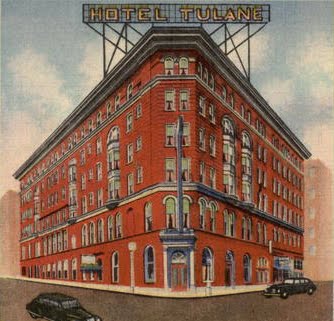
Castle Studio, The Tulane Hotel, 206 8th Ave. North, Nashville 3, TN
George McCormick: vocal, guitar; Sam Pruett: lead guitar; Don Helms: steel guitar; Jerry Rivers: fiddle; Cedric Rainwater: bass.
Producer: Fred Rose

Today's recording session may be of particular interest to Hank Williams fans. George McCormick was a Nashville musician that played with a variety of bands in the late '40s and early '50s including a gig with Big Jeff Bess (the husband of Tootsie of Orchid Lounge fame) and his Radio Playboys. George was eventually featured on occasional solo vocals emulating his favorite, and recently deceased country singer, Hank Williams. While the Radio Playboys were playing a run at the Starlite Club in Nashville, George was heard by Jimmy Rule who was a songwriter and the co-author with Hank Williams of his book on country songwriting. Rule brought McCormick to the attention of his employer Fred Rose who was impressed enough to sign McCormick to MGM Records and give him songs that were planned for Hank Williams. Rose produced at least three sessions on George McCormick - two in 1953, and the one from today in 1954. McCormick's MGM records were obvious and conscious nods to Hank Williams, but this third session recorded today is particularly Williams-like in that it utilized Hank's Drifting Cowboys, including the great Don Helms on steel guitar who co-wrote "Don't Fix Up The Doghouse" which was intended for Hank as a followup to "Move It On Over" (much after the fact, as "Move It" was originally recorded in 1947). None of these songs were hits, but I think they're thoroughly enjoyable recordings that have a definite Hank Williams sound to them. I hope you enjoy them too...

Thursday, June 17, 2010

Classic Recording Sessions - On This Date (6/17)


The Carter Family
Saturday, June 17, 1933 - 77 years ago
Camden, NJ
Sara Carter: vocal, autoharp, guitar; Maybelle Carter: guitar, vocal; A.P. Carter: vocal
Producer: Ralph Peer
Victor Records


Thursday, June 17, 1937 - 73 years ago
New York, NY
Sara Carter: vocal, autoharp, guitar; Maybelle Carter: guitar, vocal; A.P. Carter: vocal
Decca Records

Today we have 26 songs from the Carter Family from two sessions exactly four years apart. The first session is a significant one for the Carter Family in that it almost didn't happen. This was the first session after Sara and A.P. had separated following Sara's initial "flings" with A.P.'s cousin Coy Bays (who she would ultimately marry), and A.P.'s becoming aware of it. Sara had moved back with her aunt and uncle and initially refused to do any more recordings with the group. A.P. wrote letters back and forth with their producer/manager Ralph Peer until ultimately he convinced Peer to have his wife Anita write a personal letter to Sara making a plea in favor of the recordings. It worked, because Sara realized it was her only way to make money for her and her children. Sara moved back to Maces Springs in advance of the recordings to rehearse with the group, but stayed with Maybelle and Eck's family rather than at home with A.P. and the children. The trip to New Jersey for the sessions (and New York where they would also do a radio broadcast from Radio City Music Hall) could well have been strained, but the performances from the session don't suffer. Several classics, including "Give Me Roses While I Live," "Gold Watch And Chain," and "School House On The Hill" are recorded at today's session. Significantly, another classic Carter Family song recorded at today's session, but that still remains unissued is an early version of "Will The Circle Be Unbroken." The Carters would record two more sessions in 1934 to wrap up their initial run at Victor before moving on to the American Record Corporation (ARC) in 1935.

By our second session, four years later, much has changed. Sara and A.P. are now divorced. They've left ARC for Decca Records where they would do sessions each June for three years running from 1936 to 1938. Today's session is the first day of the second year of the Decca sessions. At ARC they would re-record much of their Victor material, but at Decca all the material was new. Twelve songs were recorded today including the classics, "In The Shadow Of Clinch Mountain" and "Hello Stranger."

It's a lot of Carter Family to listen to, but I hope enjoy both of these sessions as much as I do...

Wednesday, June 16, 2010

Classic Recording Sessions - On This Date (6/16)


The Blue Sky Boys - 74 years ago (1st session)
Tuesday, June 16, 1936
Charlotte, NC
Bill Bolick: vocal, mandolin; Earl Bolick: vocal, guitar.
Producer: Eli Oberstein

Today marks the 74th anniversary of the debut recordings by Earl & Bill Bolick, the Blue Sky Boys. I'm a big fan of country brother duets, and as much as I love the Monroe Brothers and Delmore Brothers, I'd have to say that my favorite brother act of the '30s has to be the Blue Sky Boys. The Monroes and Delmores played faster and were hotter instrumentalists, but that thing that makes the blending of siblings so sublime seems to be in particular abundance when it comes to the Bolick Brothers. They have such a sweet sound, and that sound went on to influence two of the greatest brother acts of the '50s: Charlie & Ira Louvin, and Don & Phil Everly.

Charles K. Wolfe in his chapter on the Blue Sky Boys from his book Classic Country: Legends of Country Music has the following to say about the session recorded today:

It was a late spring morning on June 16, 1936, in Charlotte, North Carolina, Two teenage boys sat reading a newspaper in a waiting room in the old Southern Radio Building on South Tryon Street. Inside, engineers from the Victor recording company had draped the walls with heavy curtains to create a temporary recording studio. A big moon-faced man named Eli Oberstein was in charge, and he was making records for Victor’s new Bluebird label – a cut-rate record subsidiary that featured blues and country music, and sold in those Depression-era times for 35 cents apiece. He had recently discovered that Charlotte was a good location to find both kinds of talent – he had already recorded hit acts like Mainer’s Mountaineers and the Monroe Brothers there – and now he was racing through another marathon session, cutting as many as twenty or twenty-five masters in a day, and hoping that lightning would strike again.

The two teenagers in the waiting room were named Bill and Earl Bolick. They were from Hickory, North Carolina, and though they were only eighteen (Bill) and sixteen (Earl), they had been playing on radio stations in Asheville and Atlanta for a year. It was an age of duet harmony singing, and groups like the Monroe Brothers (Bill and Charlie), the Callahan Brothers, and the Delmore Brothers were winning radio fans throughout the South. Soon the Bolicks too had begun attracting fans, and while they were at Atlanta’s WGST an offer had come to record for Bluebird. Now that they were here, though, there seemed to be some confusion.

One hour dragged into two, and then three, and still nobody had spoken to the boys. Finally Oberstein brushed through the room and noticed Earl reading his newspaper. “What do you think this is, a reading room?” he snapped. “I don’t care what it is,” Earl snapped back. Oberstein then asked them what they thought they were doing there, and seemed surprised when they said their names were Bolick and they had been told to come and make records. “We understood that you had broken up,” he said. He had given their spot to somebody else. “You’re the boys who copy the Monroe Brothers, aren’t you?” he said. Again the brothers protested; they had replaced the Monroe Brothers on WGST, but they had never even heard them, let alone copied them. “Being that you’re here, I’ll give you an audition,” Oberstein finally said.

Oberstein went back into the little room that he had rigged up as a control room, and the brothers unpacked their guitar and mandolin. They checked their tuning, and then began singing into the big carbon microphone.

There’s a sunny side, where no ills betide,

On the road that we must go,

There are pleasant vales, verdant hills and dales,

Where flowers ever grow.

After a few more lines of “On The Sunny Side Of Life,” Obserstein was running out of his control room. “That’s enough,” he said. “That’s good. That’s nothing like the Monroes. It’s very different, and I think we’ll just go ahead and record you.” By now it was afternoon, and the boys began recording the material they had worked up for the session – all songs that were proven favorites with radio fans, and songs that, the boys felt, were new to records. In addition to “Sunny Side Of Life,” they did nine other pieces, ranging from old Victorian loves songs to prison songs like “I’m Just Here To Get My Baby Out Of Jail.” Of the ten songs preserved that afternoon, five were gospel tunes; the resulting Bluebird records were to write a new chapter in the history of country gospel music.

After the session, Eli Oberstein debated about what name to use for his new discovery. “At that time there were a lot of brothers recording,” recalls Bill. “So he suggested we use another name besides the Bolick Brothers. Eli and I sat down and kicked it around and came up with the name Blue Sky Boys, mainly because we were from the western part of the state, which was known as the Land of the Blue Sky.” Thus was born the name that for many came to stand for the very essence of old-time brother duet harmony singing – the Blue Sky Boys.

What a fabulous start to a recording career! I love these recordings, and I hope you enjoy them too...

Sunday, June 13, 2010

Classic Recording Sessions - On This Date (6/13)


Castle Studio, Tulane Hotel
206 8th Ave. North, Nashville 3, TN
Friday, June 13, 1952 - 58 years ago


Hank Williams
Hank Williams: vocal, guitar; Chet Atkins: guitar; Jack Shook: guitar; Don Helms: steel guitar; Charles Wright: bass; Jerry Rivers: fiddle.

(10:00 am - 1:00 pm)


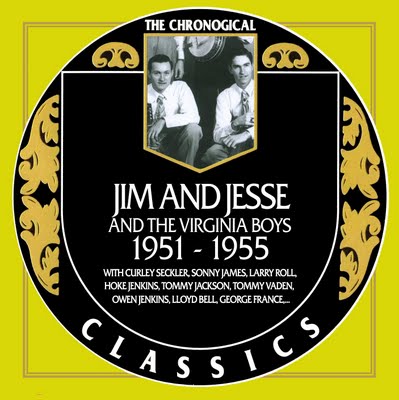
Jim & Jesse McReynolds
Jim McReynolds: vocal, guitar; Jesse McReynolds: vocal, mandolin; Curley Seckler: guitar; Hoke Jenkins: banjo; Bob Moore: bass; Sonny James: fiddle.

(2:00 pm - 5:00 pm) & (7:00 pm - 9:00 pm)


The first of Nashville's recording studios began in 1946 when three of WSM's engineers, Carl Jenkins, George Reynolds, and Aaron Shelton started Castle Recording Studios. Their initial recordings were done in WSM's studios, but by 1947 they had moved their operation to the Tulane Hotel. Today we have three back-to-back sessions recorded at Castle Studios. A morning session with country music legend Hank Williams, and afternoon and evening sessions with up-and-coming bluegrass artists Jim & Jesse McReynolds.

These are two acts in almost opposite phases of their careers. Hank is on top, and has only two sessions after this left for MGM before his passing at the end of the year. This session yields three significant hits for him, including one of his biggest, "Jambalaya." Jim and Jesse McReynolds, on the other hand, are at the very beginning of their recording career. They had previously recorded with Larry Roll as the Virginia Trio for the small Kentucky label in 1951, but these are their first bluegrass recordings as Jim & Jesse & The Virginia Boys. Today they recorded two sessions for Capitol Records. Among the songs they recorded today was the Louvin Brothers composition "Are You Missing Me" which was to became a standard for Jim & Jesse.

It's an interesting opportunity to reconstruct a day at the famous Castle Studios in the early years of the Nashville recording scene. And what an amazing it day it was too! I hope you enjoy these recordings as much as I do...

Saturday, June 12, 2010

Classic Recording Sessions - On This Date (6/12)


Ernest Tubb - 61 years ago
Sunday, June 12, 1949 (3:00 pm - 6:00 pm / 7:00 pm - 10:00 pm)
Castle Studio, Tulane Hotel, 206 8th Ave. North, Nashville 3, TN
Ernest Tubb: vocal, guitar; Owen Bradley: piano; Jack Drake: bass; Dickie Harris: steel guitar;
Mack McGarr: mandolin; Butterball Paige: lead guitar; Jack Shook: guitar.
Producer: Paul Cohen

Yesterday's post featured George Jones recording 3 top 20 records in one four-song session. Today, Ernest Tubb tops even that considerable achievement. 61 years ago today, Ernest Tubb recorded five songs in a split session (two before dinner, three after) that would all hit the top 10 on Billboard's C&W charts. Four of the songs would be issued among two singles concurrent with the sessions, while the fifth ("Driftwood On The River") was held until then end of 1951. Among the songs recorded this day are Tubb's composition for his soon-to-be second wife, "My Tennessee Baby" and Floyd Tillman's groundbreaking cheating song "Slipping Around" which would be a #1 hit for Tubb, as well as for Margaret Whiting & Jimmy Wakely, and a #5 hit for Tillman as well.

This session differs from some other Tubb sessions of the era in that the recordings feature the mandolin, not something commonly heard on Tubb records. One of the reasons for this was apparently a humanitarian gesture on ET's part. Mack McGarr was a 19-year-old mandolin player with some health issues that caused Tubb to kindly extend an offer to feature McGarr on these recordings. Tubb said:

This was one of the things you do because you like someone and the man wasn't in too good health, and I wanted to give him work. I didn't want the fiddle... so I said, "Mack, can you play something else? Play mandolin." So I let him play on "Warm Red Wine," and this was one of the highlights of his life. He said, "...I've been playing all my life, and this is the first time anybody ever called my name on a record." And he was just thrilled to death. He didn't live too long after that... He had asthma so bad he couldn't hardly breathe. He went west and it was too late. He started having hemorrhages and finally came back home and died.

It's a sad story, but it was a kind act on Tubb's part. Tubb was a very successful artist in this era, and it's heartwarming that he was so willing to help out a fellow musician. This is a pretty historic recording session, and I hope you enjoy as much as I do...

Friday, June 11, 2010

Classic Recording Sessions - On This Date (6/11)


George Jones - 48 years ago
Monday, June 11, 1962
Columbia Recording Studio, 804 16th Ave. South, Nashville 3, TN
George Jones: vocal, guitar, other musicians unknown.
Producer: Pappy Daily

Any session that produces three top 20 hits (and two of them top 10) would have to be considered a pretty successful session. And that's just what George Jones did on this day in 1962. George was pretty fresh into his new label association with United Artists, and it was off to a great start. His first single for the label ("She Thinks I Still Care"/"Sometimes You Just Can't Win"), had both sides chart at #1 and #17 respectively, and he nearly repeated that success with a single released from today's session ("A Girl I Used To Know"/"Big Fool Of The Year") which charted at #3 and #13 respectively. That, and "Not What I Had In Mind" charted at #7 as well. That's a lot of numbers, but the point is, during this era George was really knocking them out of the park, and this session was particularly productive. "A Girl I Used To Know" was a song that George would revisit as a duet with Tammy Wynette in 1980, as "Just Someone I Used Know" which previously had been a #5 hit for Porter Wagoner and Dolly Parton in 1969. There are those numbers again. The bottom line is, this is a really fruitful and enjoyable George Jones session. I hope you enjoy it too...

The three hits from this session, as well the rest of his United Artists singles are contained on Omnivore Recordings' recent release The Complete United Artists Solo Singles.


Thursday, June 10, 2010

Classic Recording Sessions - On This Date (6/10)


Jimmie Rodgers & Sara Carter - 79 years ago
Wednesday, June 10, 1931
Louisville, KY
Jimmie Rodgers: vocal, guitar; Sara Carter: vocal, guitar.

I guess it goes without saying that this is a pretty monumentally historic recording session. Jimmie Rodgers and the Carter Family both made their recording debuts a little less than 4 years before this session at the legendary Bristol Sessions in August of 1927. The astounding success of the Carter Family, and particularly Jimmie Rodgers, caused Victor to pair the two acts for this session, and the next day's session that featured the entire Carter Family with Rodgers for two sides of skits that try to imagine what it would be like for the Carters to visit Jimmie in Texas, and vice versa for Jimmie in Virginia. Interestingly, the reformed Carters (sans Maybelle, and adding children of A.P. and Sara) would record unusual sequels to these records with Mrs. Jimmie (Carrie) Rodgers for Acme Records in April of 1956. While those records are interesting, to me they can't compare to the wonderful chance we have to hear two of the era's most influential vocalists singing together - when they yodel together, life just lightens up for me a bit. I hope you enjoy these recordings as much as I do...

Tuesday, June 8, 2010

Classic Recording Sessions - On This Date (6/8)


Carl Smith - 59 years ago
Friday, June 8, 1951 (1:00 pm - 4:00 pm)
Castle Studio, The Tulane Hotel, 206 8th Ave. North, Nashville 3, TN
Carl Smith: vocal, guitar; Grady Martin: guitar; Velma Smith: guitar; Bob Foster: steel guitar; Hal Smith: bass.
Producer: Don Law


Wanda Jackson - 54 years ago
Friday, June 8, 1956 (Session #4414, 11:00 am - 3:30 pm)
Capitol Recording Studio, 1710 North Vine St., Hollywood 28, CA
Wanda Jackson: vocal, guitar; Joe Maphis: guitar; Buck Owens: guitar; Lewis Talley: guitar;
Ralph Mooney: steel guitar; Clarence Dooley: bass; Marion Adams: drums; Jelly Sanders: fiddle.
Producer: Ken Nelson

Today's sessions differ for the sake of comparison from yesterday's in that they're only 5 years apart as opposed to 20. Today's session for Carl Smith finds him as his career is taking off in a big way. His first Billboard hit has just entered the charts this month, and today he's recording what will prove to be his second #1 hit, "(When You Feel Like You're In Love) Don't Just Stand There." Carl's style of country is still very much in vogue and several other '50s post-Hank Williams stars are launching their careers around this time with similar styles as well. The arrangements on these tracks are relatively sparse and straightforward with a small group of Nashville studio players, including the ubiquitous Grady Martin on lead guitar. Again, fairly representative of the style of country being produced in Nashville at the time.

But five years later, the dawn of rock and roll is upon us. And that's where we find Wanda Jackson today. Five years later, and in California. Though Wanda would ultimately have most of her success as a country artist (and today's session is primarily in that vein), she's most lauded for her rockabilly recordings from this era. Even during her prime rockabilly period, Wanda stepped back and forth between country and rockabilly, sometimes even on the same song, a perfect example of which is "I Gotta Know" recorded at today's session, and one of my all-time favorite Wanda Jackson recordings. This session features several of Bakersfield and Hollywood's prime studio players from the era too with Ralph Mooney, the West Coast's premier pedal steel player, and guitartists Joe Maphis and Buck Owens, a full year before his first recordings for Capitol. Also on guitar and from Bakersfield is Lewis Talley who would figure prominently in the career of Merle Haggard, particularly early on.

Not as much has changed between today's two sessions as yesterday's. But the change is worth noting. The impact that Elvis and rock & roll had on country music both in Nashville and on the West Coast was significant. If you listen to previous posts that feature post-rock & roll country recordings like the 1957 Porter Wagoner session from yesterday and the 1960 Lefty Frizzell session from a while back, those help illustrate the point.

Or, just listen and enjoy the music. I hope you do...

Tracks from today's Wanda Jackson session, as well as many of her other prime era recordings, are available on Omnivore Recordings' recent release The Best Of The Classic Capitol Singles.


Monday, June 7, 2010

Classic Recording Sessions - On This Date (6/7)


Bob Wills & His Texas Playboys - 73 years ago
Monday, June 7, 1937
Brunswick Warehouse, Dallas, TX
Bob Wills: fiddle, vocal; Tommy Duncan: vocal; Herman Arnspiger: guitar; Sleepy Johnson: guitar, fiddle; Johnnie Lee Wills: banjo; Leon McAuliffe: steel guitar; Joe Ferguson: bass; Smokey Dacus: drums; Jesse Ashlock: fiddle; Cecil Brower: fiddle: Al Stricklin: piano; Everett Stover: trumpet; Ray DeGeer: clarinet, sax; Zeb McNally: sax; Robert Dunn: trombone.


Porter Wagoner - 53 years ago
Friday, June 7, 1957 (9:00 pm - 1:30 am)
RCA Victor Studio, Methodist Television, Radio & Film Commission, 1525 McGavock St., Nashville, TN
Porter Wagoner: vocal, guitar; Red Gale: vocal; Hank Garland: guitar; Hamilton Wilson: guitar; Don Warden: vocal; Basil Burnette: steel guitar; Ernie Newton: bass; Louis Dunn: drums; Marvin Hughes: piano.
Producer: Chet Atkins

I'm going to let the music of these two sessions do most of the talking today. Other than to pose a point to consider: 20 years span these two sessions, and I think it's interesting to note the huge advancement in country music in that time. Now, take a current hit on country radio, then back up to a random Garth Brooks or Reba track from 1990 and see if that much has changed in the past 20 years. A lot of factors go in to that, I realize, so it's not a perfectly clean comparison. But even still, it's a pretty staggering difference. I hope you enjoy today's two recording sessions.

Sunday, June 6, 2010

Classic Recording Sessions - On This Date (6/6)


Spade Cooley - 64 years ago
Thursday, June 6, 1946
CBS Studio (Radio Station KNX), 6121 Gower & Sunset Blvd., Hollywood 28, CA
Spade Cooley: fiddle; Tex Williams: vocal; Smokey Rogers: guitar, vocal; John Weis: guitar; Noel Boggs: steel guitar; Muddy Berry: drums; Andrew Soldi: fiddle; Paul Feathersone: harp; Pedro DePaul: accordion; George Barmby: accordion; unknown: piano & bass.

This is a historic date for Spade Cooley as it was his last with vocalist Tex Williams and the majority of the band featured on this session. It was also his last for Columbia. After this, Cooley would move to RCA Victor with a less successful band, both artistically and commercially. Tex Williams took a good part of this band with him to Capitol Records where he had several hits of his own. This session is steel guitarist Noel Boggs's first with Cooley. Though Boggs continued with Cooley after this session, the magic for the Spade Cooley band was pretty much gone. They did have some success after these recordings, but the golden era was pretty much past. Seems like we're ending on a down note, so hopefully that doesn't detract from this wonderful recording session we're featuring today. Hope you enjoy it...


Tuesday, June 1, 2010

Classic Recording Sessions - On This Date (6/1)


Patsy Cline - 55 years ago (1st session)
Wednesday, June 1, 1955
Bradley Studio, 804 16th Ave. South, Nashville 3, TN
Patsy Cline: vocal; Harold Bradley: guitar; Owen Bradley: piano; Farris Coursey: drums;
Don Helms: steel guitar; Tommy Jackson: fiddle; Grady Martin: guitar; Bob Moore: bass.
Producer: Owen Bradley

Fifty-five years ago today, Patsy Cline had her first professional recording session in Nashville produced by Owen Bradley, an arrangement that would not vary throughout her short recording career. Though Patsy's records were issued first on Coral and then Decca, she wasn't actually signed to Decca until 1960. Patsy was actually signed to 4 Star, which was a music company in Hollywood California. Though they had their own record label, they chose to release Patsy's records through Coral and Decca. Their primary role in her recording career was to have control over her choice of repertoire which allowed them to exploit songs from their own publishing catalog. Though there are good songs among Patsy's 4 Star recordings, she was by and large bound to some pretty horrible material. In 1957, Patsy broke out with a sizable hit in "Walkin' After Midnight" (and some great national exposure on Arthur Godfrey's Talent Scouts TV program), but other than that, she had no chart success until she signed with Decca proper in 1960. While the material was largely inferior, there are still highlights due to Patsy's amazing singing. No matter how bad the song (or in some cases, the arrangements) she's completely committed and she really brings it all the time. In a way, it kind of reminds me of early Billie Holiday in that most of the material she was allowed to record for years was similarly substandard. And like Patsy Cline, her performances are always so spot on that you can often forgive the material and just enjoy the singing. And in both cases, the accompanying musicians also often help the end results rise above the subpar songs.

Today's session doesn't have any really horrible songs, but they're mostly pretty nondescript at best. I guess I have to point out given that it's the source of the name of this blog that "Honky Tonk Merry Go Round" was recorded at this session. It's not a great song, but it has some personal meaning to me in that it was among the first Patsy Cline songs I heard as a 4 or 5 year old child on a compilation album I used to listen to repeatedly in my grandparents' basement (which also included Sun-era Johnny Cash). "Honky Tonk Merry Go Round" was a standout track to me at the time, and being a 4 or 5 year old child, I'm guessing I didn't get the metaphor and was somewhat taken in by a song about a merry-go-round. Another thing that lured me in, though, was the steel guitar of Don Helms the same way it did on Hank Williams records I heard at that age. On this track, Helms plays in a style somewhat similar to what he did with Hank Williams. On some of the other tracks, we hear what is probably a pretty early example of Don's work on the pedal steel.


Faron Young & Patsy Cline
Navy Country Hoedown #40 (summer 1956)

As an added bonus today, we have a radio program from the summer of 1956. This is about a year after Patsy's first session featured today, but I thought it was a nice addition as it contains another version of "Turn The Cards Slowly" which was recorded at that first session. Plus, you get a little Faron Young. Hope you like it.

Saturday, May 29, 2010

Classic Recording Sessions - Three Days


Patsy Cline
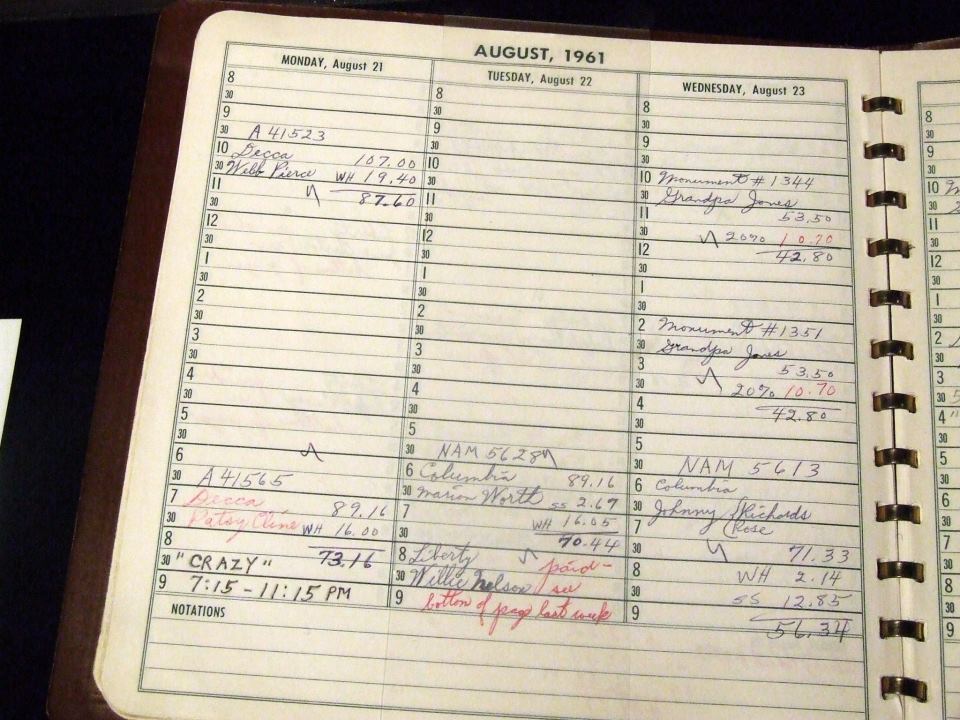
Monday, August 21, 1961 (7:15 pm - 11:15 pm)
Bradley Film & Recording Studio, 804 16th Ave. South, Nashville 3, TN
Patsy Cline: vocal; Harold Bradley: guitar; Grady Martin: guitar; Randy Hughes: guitar; Walter Haynes: steel guitar; Bob Moore: bass; Buddy Harman: drums; Floyd Cramer: piano; Jordanaires: backing vocals.
Producer: Owen Bradley
11037 Crazy

Willie Nelson
Tuesday, August 22, 1961
Nashville, TN
Willie Nelson: vocal, guitar; other personnel unknown

Tuesday, September 12, 1961
Nashville, TN
Willie Nelson: vocal, guitar; other personnel unknown

Three days for Willie Nelson:
Yesterday: Patsy Cline recorded "Crazy." Willie's big break as a songwriter came earlier in the year with Faron Young's recording of "Hello Walls." Now, Patsy Cline records what proves to be a
signature song both for her and for Willie.
Today: Willie is recording his first session for Liberty Records. "Touch Me" is recorded this day and
will ultimately prove to be his first solo hit - #7 on the Billboard country charts in 1962 (he
had a #10 hit with then-wife Shirley Collie earlier that year).
Tomorrow (well, three weeks later): Willie has his second session for Liberty that yields 10
wonderful songs that would be a big part of Willie's first album And Then I Wrote.

"Crazy" by Patsy Cline is an undisputed classic. It's here today more for context. The real focus of
today's post is Willie Nelson. Having Patsy record "Crazy" was obviously a huge break for Willie. It
would seem that Owen Bradley had high expectations for the song for Patsy as it was the only
song recorded on that Monday. I suppose it's doubtful that Willie was in attendance at the session,
but I'd like to think he was at least aware that it was happening. What's kind of incredible is that
the very next day was another pretty important career day for Willie - his first session for Liberty
Records which were his first significant commercial recordings. He had recorded several demos
in Nashville, some of which have been issued over the years, but aside from a few sporadic small
label records, this is pretty much where Willie sprang forth as a recording artist. As much as I
appreciate and respect Willie's later recordings that he's primarily known for, this early Liberty
stuff is definitely my favorite Willie material. The recordings were done on a somewhat limited
budget, so the arrangements are pretty sparse, but direct and full of feel. Willie's got his
incredible phrasing even this early (in fact, pronounced in more interesting ways at this point,
I think) and the end result is so cool it makes me want to light up a cigarette and slick back my
hair with Brylcream, or Pomade or whatever Willie was using on his hair back before it was
braided. I hope you enjoy these recordings as much as I do.